58jl Probability in Casino Games
Mastering Probability in 58jl Casino Games: An Advanced Guide to Winning Promotions
Welcome to an in-depth exploration of probability in casino games, tailored for the discerning player seeking an edge in the vibrant Philippines market. For those who frequent the digital felt of 58jl, understanding the underlying mathematical principles is not just an academic exercise; it's a crucial component of advanced strategy. This guide delves into the intricate world of odds, house edges, and variance, equipping you with the knowledge to make more informed decisions, especially when engaging with exciting promotion activity. We’ll move beyond basic luck, dissecting how probabilities shape outcomes and how you can leverage this understanding to enhance your gameplay and maximize your chances of success, particularly when considering the exclusive offers available through our platform. Ready to elevate your game? Download APP now and explore our Mobile Template for a seamless experience.
Table of Contents
- The Foundation: Understanding Probability and House Edge
- Advanced Strategies for Specific Casino Games
- Leveraging Promotions and Bonuses with Probability
- Managing Variance and Bankroll Effectively
- Practical Application: Real-World Scenarios
- The Psychological Edge: Discipline and Decision Making
The Foundation: Understanding Probability and House Edge
At the heart of every casino game lies probability – the mathematical likelihood of an event occurring. For advanced players, grasping this concept goes beyond simple odds; it involves a deep understanding of the house edge. The house edge is the casino's built-in advantage, expressed as a percentage of the player's initial bet that the casino expects to keep over the long run. For instance, in a game with a 2% house edge, for every ₱100 wagered, the casino expects to profit ₱2 over an infinite number of plays. It's crucial to remember that this is a long-term average; short-term results can vary wildly due to variance.
Different games have different house edges. Blackjack, when played with perfect basic strategy, can have a house edge as low as 0.5%, making it one of the most favorable games for players. Conversely, games like Keno or certain slot machines can have house edges exceeding 10% or even 20%. As a seasoned player in the Philippines Market, your first step should always be to identify games with lower house edges, as this directly translates to better long-term expected returns. Understanding the specific probabilities of each outcome within a game, such as drawing a certain card in poker or landing a specific combination on a slot reel, allows you to make statistically sound decisions rather than relying on intuition alone. This foundational knowledge is paramount for any serious player looking to optimize their gameplay on our Mobile Template.
For more insights into game mechanics and probabilities, explore our casino games.
Advanced Strategies for Specific Casino Games
Moving beyond the basics, advanced players tailor their strategies to the specific probabilistic structures of each game. This isn't about cheating the system, but about playing optimally within its rules.
Blackjack: Card Counting and Deviations
While basic strategy minimizes the house edge, advanced blackjack players might explore card counting. This technique involves tracking the ratio of high to low cards remaining in the shoe to determine when the player has a statistical advantage. When the count is positive, meaning more high cards are left, players increase their bets. When negative, they decrease them. It's a skill that requires practice and mental discipline, and while often frowned upon by land-based casinos, it's a powerful tool for online players to understand the shifting probabilities. Deviations from basic strategy based on the count are also key, such as hitting on a hard 16 against a dealer's 10 when the count is favorable.
Poker: Pot Odds and Implied Odds
In poker, probability is dynamic. Every card dealt changes the odds. Advanced players meticulously calculate pot odds – the ratio of the current pot size to the cost of making a call – to determine if calling a bet is mathematically profitable. Beyond pot odds, implied odds consider how much money you expect to win if you hit your hand on a later street. This requires estimating future bets and your opponent's tendencies, adding a layer of strategic depth. Understanding probabilities of hitting draws (outs) and combining them with betting patterns is crucial for long-term success in poker. Join a poker table and test your skills.
Roulette: Section Betting and Advanced Tracking
While roulette is fundamentally a game of chance, advanced players often employ strategies like section betting (betting on specific sections of the wheel) or even tracking previous spins to identify potential biases in a physical wheel (though this is less relevant for RNG-based online games). For online roulette, understanding the different odds for inside vs. outside bets and managing bet sizes based on your bankroll and risk tolerance is paramount. The European wheel (single zero) offers better odds than the American wheel (double zero), a simple probabilistic choice that significantly impacts your long-term returns.
Slots: Volatility and RTP
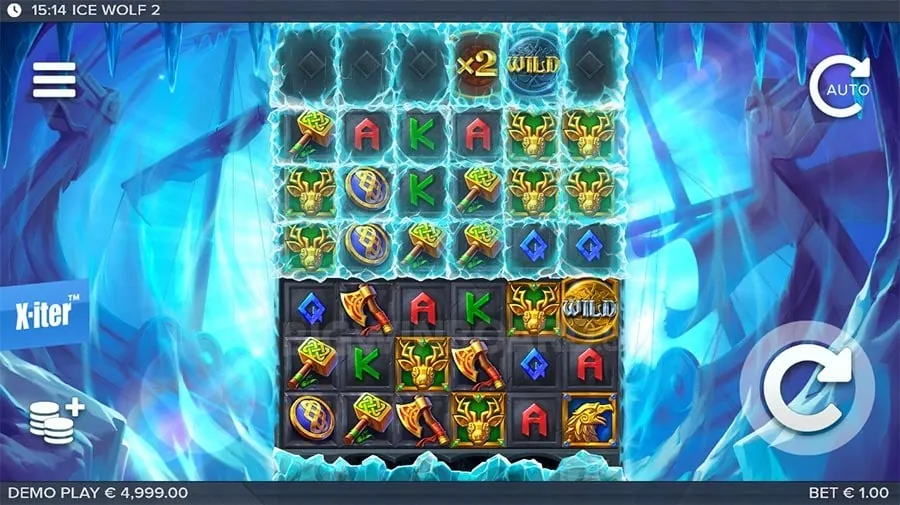
For slot enthusiasts, understanding volatility (or variance) and Return to Player (RTP) percentage is key. RTP indicates the theoretical percentage of all wagered money a slot machine will pay back to players over time. High RTP slots (e.g., 96% or higher) are generally preferred. Volatility describes the risk associated with a particular slot game. High volatility slots offer larger, less frequent wins, while low volatility slots offer smaller, more frequent wins. Advanced players choose slots that align with their bankroll and risk appetite, often opting for higher RTP and understanding that high volatility requires a larger bankroll to weather dry spells. Check out our latest original slot games.
Leveraging Promotions and Bonuses with Probability
For advanced players, promotions are not just free money; they are opportunities to shift the probabilistic advantage. When 58jl offers a promotion activity, such as a deposit bonus or free spins, it often comes with wagering requirements. Understanding these requirements in the context of game probabilities is vital.
A 100% deposit bonus with a 30x wagering requirement means you need to wager 30 times the bonus amount before you can withdraw. If you receive a ₱1,000 bonus, you need to wager ₱30,000. Now, consider the house edge of the games you play. If you play a game with a 1% house edge, you statistically expect to lose ₱300 (1% of ₱30,000) while fulfilling the wagering requirements. If your bonus is ₱1,000, you still have a net expected gain of ₱700. However, if you play a game with a 5% house edge, your expected loss would be ₱1,500, meaning you'd statistically lose money trying to clear the bonus.
Therefore, advanced players strategically use bonuses on games with the lowest possible house edge to maximize their expected value. They also consider the contribution rate of different games towards wagering requirements (e.g., slots often contribute 100%, while blackjack might contribute only 10%). By combining a low house edge game with a high contribution rate, players can efficiently clear bonuses with a positive expected outcome. Always read the terms and conditions of any promotion activity carefully on our Mobile Template to identify the best probabilistic path to profit.
Don't miss out on our latest promotion activity!
Managing Variance and Bankroll Effectively
Probability tells you what to expect in the long run, but variance describes the short-term fluctuations. Even with a positive expected value, you can experience losing streaks. Effective bankroll management is the advanced player's shield against variance.
Understanding Variance
Variance is the deviation of actual results from expected results. In casino games, this means you won't always win when the odds are in your favor, and you won't always lose when they're against you. High variance games (like slots with large jackpots) offer big wins but also long periods of losses. Low variance games (like blackjack with basic strategy) offer smaller, more frequent wins and fewer prolonged losing streaks. Recognizing the variance of the games you play is crucial for setting realistic expectations and managing your emotional response to wins and losses.
Strategic Bankroll Allocation
An advanced player never risks a significant portion of their bankroll on a single session or bet. A common guideline is to only bet 1-2% of your total bankroll on any given hand or spin. This strategy ensures that you have enough capital to withstand inevitable losing streaks and stay in the game long enough for the probabilities to play out in your favor. For example, if you have a ₱10,000 bankroll, your maximum bet should be ₱100-₱200. This allows for numerous betting opportunities and mitigates the risk of ruin due to short-term variance. Furthermore, consider setting stop-loss limits for each session – a predetermined amount you are willing to lose before walking away – and profit targets, allowing you to lock in gains.
For seamless access to your account and bankroll management tools, make sure to login to 58jl.
Practical Application: Real-World Scenarios
Let's put these advanced concepts into practice with a couple of real-world scenarios relevant to the Philippines Market:
Scenario 1: Clearing a Bonus with Specific Game Restrictions
You receive a ₱5,000 bonus with a 20x wagering requirement (meaning ₱100,000 must be wagered). Slots contribute 100%, but Live Casino games contribute only 10%. You know a particular slot game has an RTP of 96% (4% house edge), and a Live Baccarat game has a house edge of 1.06% (on Banker bet).
Advanced Player's Approach: 1. Calculate Expected Loss on Slots: To wager ₱100,000 on slots, your expected loss is ₱100,000 * 0.04 = ₱4,000. 2. Calculate Equivalent Wager for Live Casino: If you played Live Baccarat, to contribute ₱100,000 to wagering, you'd actually need to wager ₱1,000,000 (₱100,000 / 0.10). Your expected loss would then be ₱1,000,000 * 0.0106 = ₱10,600. 3. Decision: Despite the lower house edge of Baccarat, the lower contribution rate makes slots the more probabilistically favorable option for clearing this specific bonus, as your expected loss is significantly lower. The net expected gain from the bonus would be ₱5,000 - ₱4,000 = ₱1,000.
Scenario 2: Selecting an Optimal Game for a Session
You have a bankroll of ₱20,000 and want to play for a few hours. You are deciding between a high-volatility slot with a 96.5% RTP and a low-volatility Blackjack game (with perfect basic strategy) with a 0.5% house edge.
Advanced Player's Approach: 1. Consider RTP vs. House Edge: The Blackjack game has a significantly lower house edge (0.5%) compared to the slot's implied house edge (3.5%). This immediately points towards Blackjack for better long-term returns. 2. Consider Volatility: With a ₱20,000 bankroll for a few hours, a high-volatility slot could deplete your funds quickly if you hit a cold streak. The low-volatility Blackjack game offers a more stable experience, allowing you to play longer and potentially grind out smaller, consistent wins. 3. Decision: The advanced player would choose Blackjack. While the slot offers the allure of a big win, the higher house edge and volatility make it a riskier proposition for sustained play and bankroll preservation. The consistent, lower house edge of Blackjack provides a better probabilistic path to maintaining and growing the bankroll over the session.
These scenarios highlight how advanced players use probability and related concepts to make data-driven decisions, turning mere gambling into a calculated pursuit. Always remember to check our live casino and sports betting options for varied opportunities.
The Psychological Edge: Discipline and Decision Making
Even with a profound understanding of probability, the human element remains a significant factor. Advanced players cultivate a psychological edge through discipline and rational decision-making, resisting common pitfalls that can undermine even the most statistically sound strategies.
Avoiding Cognitive Biases